
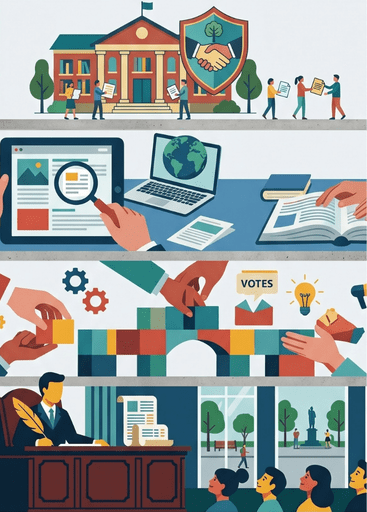
What are public policies?
Public policies are the rules, laws, and decisions made by governments to protect people’s health and well-being. They can shape the environments we live in, from the safety of the products we use to the quality of the air we breathe and the food we eat.
When it comes to endocrine disrupting chemicals (EDCs), public policies play a key role in reducing exposure at the population level.
Why do policies matter?
While personal choices can help reduce exposure, they are not enough on their own. EDCs are often present in everyday products and environments, and it is not always possible to expect individuals to manage all risks themselves. This is why policies are essential.
Effective policies can:
- Limit or ban harmful chemicals;
- Ensure that safer products are placed on the market;
- Improve transparency and labelling to allow informed choices;
- Support research and safer product development;
- Protect the most vulnerable groups, such as children and pregnant women.
In short, policies help create safer environments for everyone, including those who may have fewer resources or choices.
What policies exist in Europe?
The European Union has some of the most advanced chemical safety regulations in the world. Several policies already address EDCs.
Key examples include:
- CLP Regulation(Classification, Labelling and Packaging): Ensures that hazards are clearly communicated through labels and safety information.
- REACH (Registration, Evaluation, Authorisation and Restriction of Chemicals): A framework that regulates the use of chemicals in the EU and restricts substances of concern.
- Regulations on pesticides and biocides: Include specific criteria to identify and restrict the use of endocrine disrupting substances.
- Food contact materials legislation: Aims to ensure that materials in contact with food are safe for consumers.
These and other EU policies continue to evolve as scientific knowledge grows, including research from projects like NEMESIS.

How can you stay informed?
Understanding policies does not require technical expertise. There are accessible and reliable sources of information available to the public.
You can:
- Follow updates from trusted public health authorities or consult official European websites on chemicals and safety (e.g.: ECHA Europe; EDC Free Europe; EDC list)
- Look for clear labels and guidance when choosing products (e.g. Ecolabels);
- Stay informed through science-based projects and initiatives, like ours (e.g., ENKORE; NEMESIS).
Being informed helps you make better decisions and understand how your environment is being protected.
What role can you play?
Even though policies are made at government level, people still have an important role.
You can:
- Support responsible companies and safer products through your consumer choices;
- Stay informed and share reliable information with others;
- Engage in public discussions or consultations when opportunities arise;
- Support policies and organizations that protect health and the environment.
Change often happens when science, policy, and society work together.
Reducing exposure to endocrine disrupting substances is not only an individual responsibility. It is a shared effort between citizens, scientists, industry, and policymakers.
Public policies support safer environments and allow healthier choices by default for everyone.
For policymakers
If you are a policymaker or work in public health, regulation, or governance, you can find practical tools, evidence, and policy-relevant resources on the NEMESIS project website.
These materials are designed to support informed decision-making and the development of effective strategies to reduce exposure to endocrine disrupting substances.