How does exposure to EDCs happen?

Most of the time, exposure to endocrine disrupting chemicals (EDCs) does not feel like exposure at all.

It may happen while eating a meal, breathing the air at home or applying a face cream. There is no warning sign and no immediate reaction. This is why many people are surprised to learn that contact with EDCs is part of everyday life.

Exposure usually happens quietly and unintentionally, woven into normal routines.

How EDCs enter the body?

When people hear the word “chemical”, they often imagine high doses or immediate harm. But exposure to EDCs usually works differently.

It is rarely about one large dose. Instead, it is about small amounts, repeated exposure for long periods of time. Because hormones work at very low levels in the body, even small disruptions, if they happen often enough, can matter.

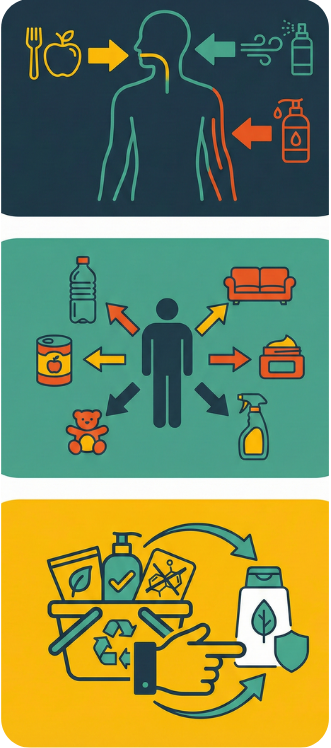
Our bodies are not closed systems. They constantly interact with the world around us. EDCs can enter the body mainly through three everyday exposure routes.
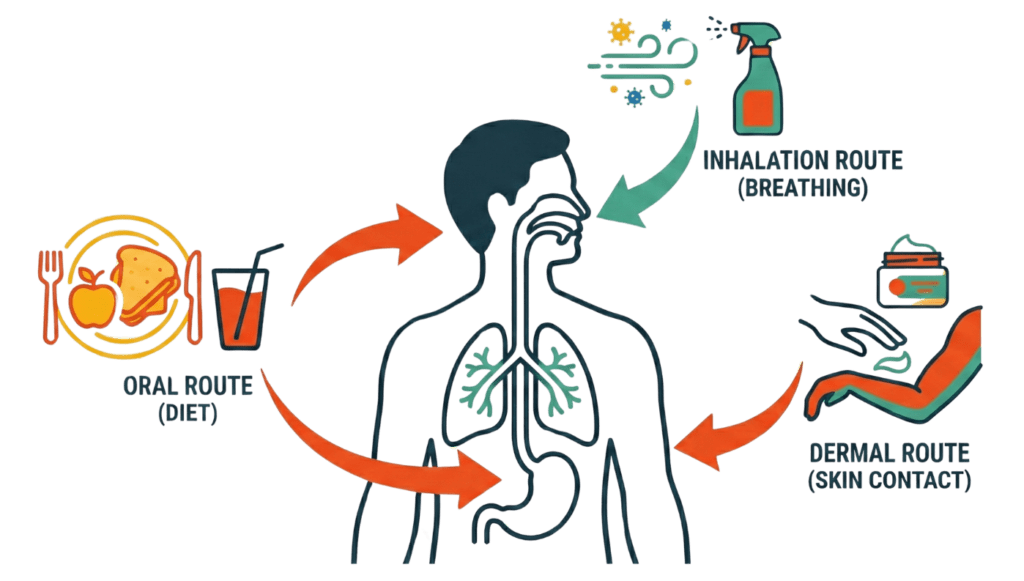
1) Eating and drinking

Food and drinks are one of the most common pathways. But also cosmetics applied in the lips. Some chemicals can migrate from:

  • food packaging
  • plastic containers
  • coatings inside cans


into what we eat or drink, especially when food is heated or stored for long periods. Over time, small amounts can add up.

2) Breathing

Indoor air matters more than many people realise. Chemicals can be present in:

  • household dust
  • emissions from furniture and/or consumer products


Because we spend so much time indoors, breathing can be an important source of everyday exposure.

3) Skin contact

The skin is another entry point. Products such as:

  • cosmetics
  • personal care products
  • cleaning products


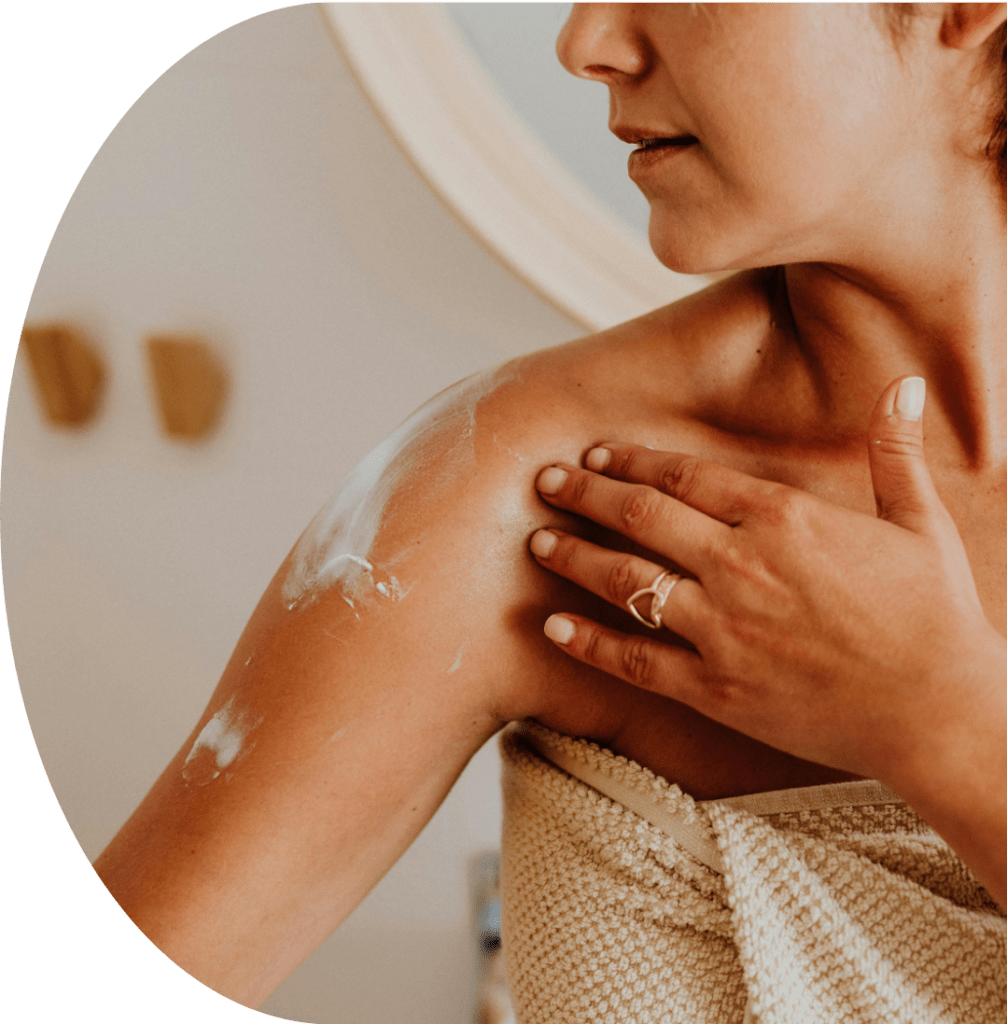
come into direct contact with the skin. Some chemicals can pass through the skin and enter the bloodstream.

You can think of the body as having several entry “doors” : what we eat, what we breathe, and what we touch.

Why everyday exposure is hard to avoid?

EDCs are used in many materials and products because they have useful properties. This means that avoiding them completely is not realistic.

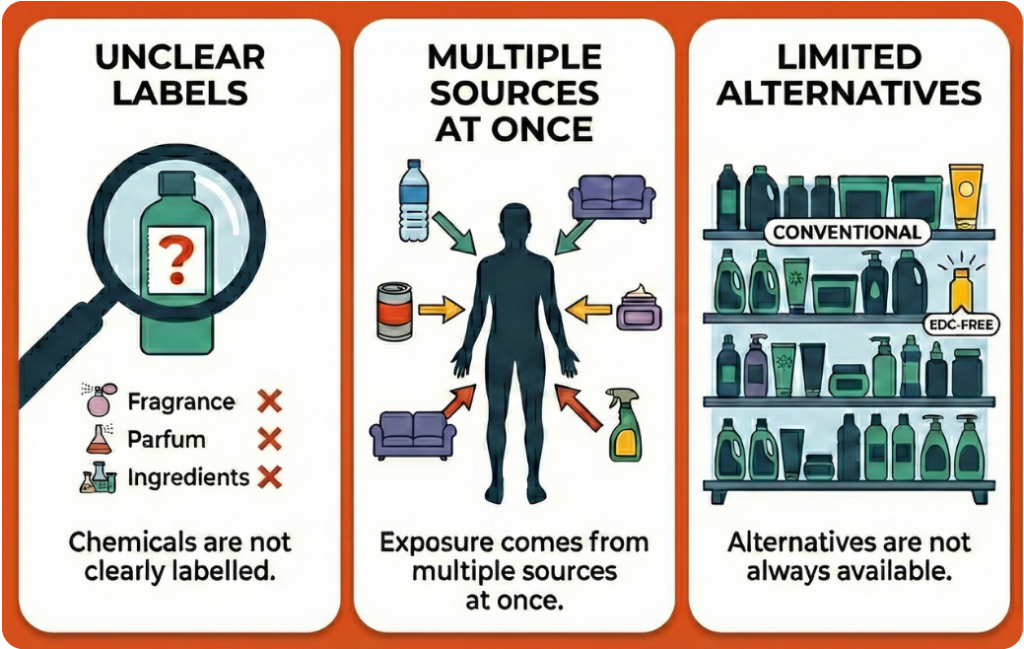
Exposure is always happening due to:

We are exposed to mixtures, small amounts of many different substances, at the same time or across the day. Each one may seem insignificant on its own, but together they can place extra pressure on how the body works.

An easy comparison is background noise. One quiet sound may not bother you, but many sounds together can become overwhelming.

Scientists are increasingly studying these combined effects, because they better reflect real-life exposure.

The goal is therefore not perfection.
It is awareness and sensible reduction where possible.

What can you do?

Everyone is exposed to EDCs to some extent. What differs is how often exposure happens, which sources are most common and when in life exposure occurs.

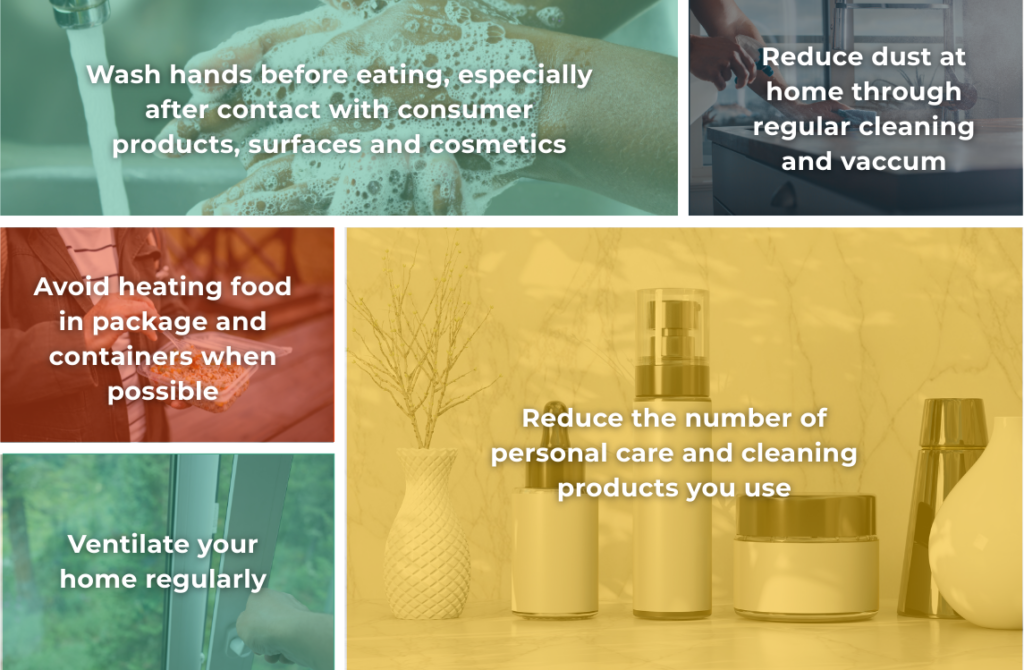
You cannot control all sources of exposure, and you are not expected to. But small, practical steps can help reduce everyday contact:

These actions are not about fear.
They are about making informed choices where you can.

Looking ahead

Exposure to EDCs is part of modern life. But exposure alone does not tell the whole story. Some people are more sensitive to these chemicals than others, especially at certain stages of life.

Who is more vulnerable to the effects of EDCs?

That is what we explore next.