What are Endocrine Disrupting Chemicals?

Think about a normal morning. Probably, you wake up, take a shower, prepare breakfast, maybe warm up leftovers, apply some cosmetics, and head out the door. None of this feels unusual. But during these ordinary moments, your body may come into contact with chemicals that can quietly interfere with our health.

These chemicals are called endocrine disrupting chemicals, or EDCs. You cannot see them, smell them, or taste them. Yet exposure can happen through everyday consumer products and in places where we live, work, and spend time, and over time they can influence important biological processes inside the body.

NEMESIS for you - What are EDCs 1

What does“EDCs” actually mean?

To understand endocrine disrupting chemicals (EDCs), it helps to first understand hormones.

Hormones are like the body’s messengers. They travel through the bloodstream, carrying instructions that tell organs and tissues what to do and when to do it. Hormones work quietly in the background, so it is easy to forget how important they are. But they help control growth, energy use, blood sugar levels, reproduction, and many other vital functions.

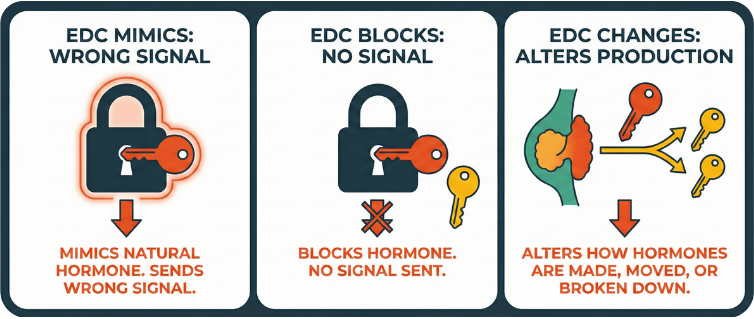
EDCs are substances that can interfere with this messaging system. Some EDCs can:

Because hormones affect many systems at once, disrupting them can have wide-ranging effects. Even small changes in hormonal signals, especially when they happen repeatedly or during sensitive life stages, can matter.

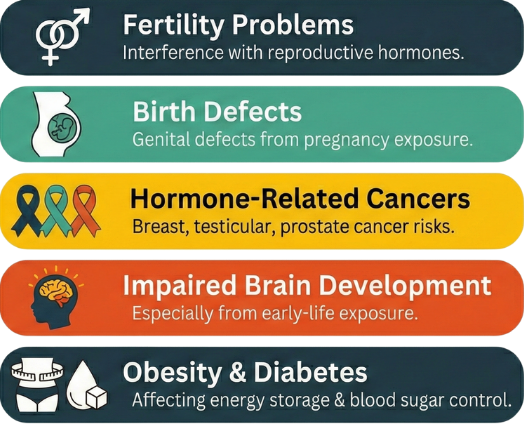
Scientific research links exposure to certain EDCs to a range of health concerns, including:

These health effects are not usually caused by a single exposure or one factor alone. Diet, physical activity, genetics, and social conditions all play important roles.

However, evidence shows that EDCs can be an additional contributing factor, interacting with hormones over time and increasing vulnerability to disease.

Understanding these effects helps explain why reducing exposure to EDCs is important for protecting health, especially during sensitive stages of life.

Are EDCs something new?

EDCs are not a recent discovery. Scientists have been studying them for decades. One of the most known EDC is BPA (Bisphenol A), and some chemical groups that you may heard about are  Phthalates, Parabens and PFAS (Per- and polyfluoroalkyl substances). 

What has changed is how common exposure has become.

Today, synthetic chemicals are used widely in:

  • food packaging and containers
  • household items and furnishings
  • personal care products
  • building materials and coatings

This means that exposure is often low-level but continuous. It is usually not about one product or one moment. It is about small exposures adding up over time, across many parts of daily life.

What this means for you?

EDCs are widespread. Exposure does not happen because of bad choices or lack of care. It happens because these chemicals are part of modern environments.

The good news is that awareness matters. Understanding these links is essential. It helps explain why reducing unnecessary exposure to EDCs is not just about the environment, it is also about protecting long-term health, supporting prevention, and creating healthier conditions for current and future generations.

You do not need to change everything at once. Small, realistic steps can already make a difference.

What can you do?

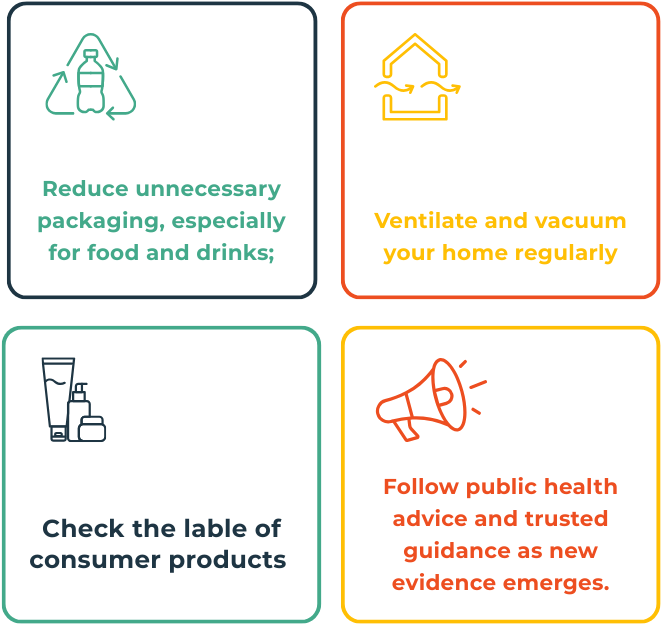
Simple actions in everyday life can help reduce exposure:

These steps are not about fear. They are about making informed, practical choices.

Looking ahead

Understanding what EDCs are helps explain why they matter. The next question is just as important:

How does exposure actually happen in everyday life?

Let’s explore that next.