
How can I protect myself?
Endocrine disrupting chemicals (EDCs) are widespread substances, and while it is not possible to control all sources of exposure, you can reduce unnecessary exposure through informed, everyday choices.
Protection is about balance. It is about understanding where exposure often comes from and adjusting habits where it makes sense, without guilt, pressure, or perfectionism.
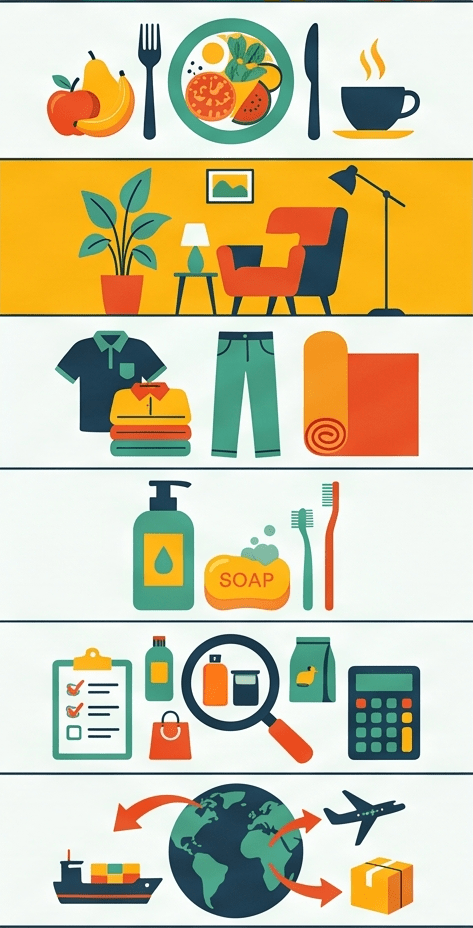
Start where it matters most: your consumer habits

Most exposure to EDCs happens through routines we repeat every day when eating, cleaning, dressing, and using personal care products. This also means that small changes, repeated consistently, can have a real impact over time.
You do not need to change your lifestyle completely. Often, protection is about doing familiar things slightly differently.
Food and drinks: simple changes that help
Food contact materials are one of the main ways to be exposed to EDCs.
Practical steps include:
- Avoid heating food in plastic containers when possible;
- Use glass, ceramic, or stainless steel for hot food and drinks;
- Do not reuse single-use plastic bottles;
- Let hot food cool slightly before storing it.
- Reduce intake of processed and pre-packaged foods;
- Thoroughly wash fruits and vegetables to remove pesticide residues.
Heat can increase the migration of chemicals from packaging into food, so these small changes can help reduce exposure.


Your home environment matters
Because we spend much of our time indoors, the home environment plays an important role.
Helpful actions include:
- Ventilating your home daily, even in colder months;
- Reducing indoor dust through regular cleaning and vacuum;
- Whenever possible, air out new products (e.g., furniture or textiles) and increase ventilation during the first two months after purchase.
- Choose furniture that is meant to be used indoors;
- Avoid home fragrances and diffusers.
Ventilation is one of the simplest and most effective tools for reducing indoor exposure.
Clothing and textiles: small habits that make a difference
From what we wear to what we use at home (such as bedding, towels, and upholstery), textiles are in close and frequent contact with our skin.
During production, textiles can be treated with different chemicals. These may be used to improve properties such as colour, durability, stain resistance, or water repellence. As a result, small amounts of these substances can remain in fabrics and come into contact with the skin.
This does not mean that clothing is unsafe. However, simple habits can help reduce unnecessary exposure.
Practical steps include:
- Washing new clothes before wearing them, to remove residues from manufacturing and finishing processes;
- Ventilating new textiles, such as curtains, sofa or car fabrics/covering, before use;
- Choosing products that meet European safety standards, such as the ones with EU labels, where chemical use is more strictly regulated than in other regions;
- Being mindful of heavily treated fabrics, such as those labelled stain-resistant or water-repellent;
- Favouring simpler materials and fewer treatments, when possible;
- Choosing cleaning products with a EU EcoLabel to wash textiles, when possible.
These actions are easy to include in everyday routines and can help reduce exposure over time, without changing what you wear. As with other sources of exposure, the goal is not completely restraining the use of certain textiles, but to make informed and balanced choices where possible.
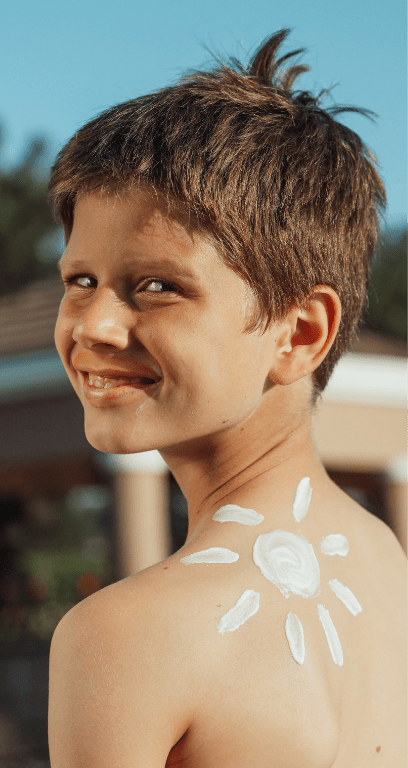
Care products
Cosmetics and personal care products come into direct contact with the skin. Using many products every day can increase overall exposure.
A useful principle is simplification:
- Fewer products can mean fewer chemicals;
- Use products you truly need, not every product available;
- Products with less ingredients and without fragrances can mean fewer chemicals.
You do not need to memorise chemical names, tools exist to help.
Practical tools to help you make informed choices
Reading labels can feel overwhelming. Fortunately, several tools can help translate complex information into something more accessible.
Some examples include:
- INCI Decoder: A free website that explains cosmetic ingredients in plain language and highlights potential concerns.
- INCI Beauty: A free app that allows you to scan barcodes and learn more about ingredients in personal care products.
- European Chemicals Agency: Provides reliable, science-based information on chemicals used in Europe and how they are regulated.
- Campaign for Safe Cosmetics: Provides reliable, science-based information on chemicals used in cosmetics.
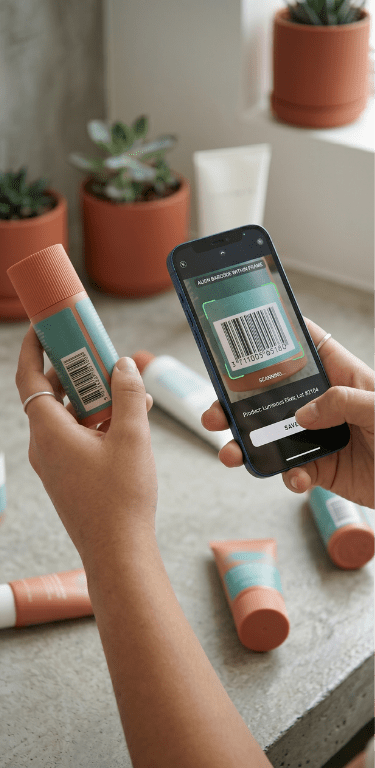
These tools are not about banning products from your life. They are there to support informed, conscious choices.
Buying products from outside Europe
Chemical regulation differs across the world. The European Union has some of the strongest chemical safety rules globally, including specific regulations to prevent exposure to endocrine disruptors chemicals.
When buying products online or from outside Europe:
- Be cautious with very cheap or poorly labelled products;
- Prefer products that meet EU safety standards (look for EU labels);
- Be mindful of cosmetics, toys, and food contact materials from unregulated regions.
This is not about avoiding everything non-European, but about being aware that safety rules are not the same everywhere.
What can you do?
In short, simple actions in everyday life can help reduce exposure.
You do not need to do everything. Choose what fits your life and build from there:
- Avoid heating food in plastic containers;
- Ventilate and vacuum indoor spaces regularly;
- Simplify personal care routines;
- Use trusted tools to understand product labels;
- Be cautious with products bought outside Europe;
- Follow reliable public health guidance as knowledge evolves, such as:
These actions are not about fear. They are about care, for yourself and for others.
Looking ahead
Individual actions matter, but they are only part of the solution. Not everyone has the opportunity to make some choices or access to safer alternatives. This is why protection cannot rely on personal responsibility alone.